Societal relationship
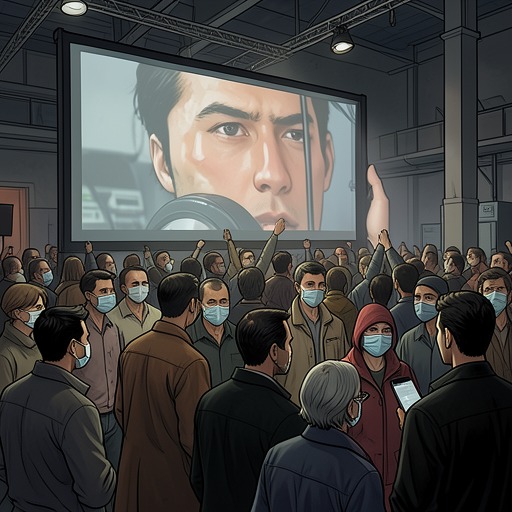
O fenômeno Jungkook: O sucesso do BTS e a criação de um superstar mundialParasocial relationships describe the emotionally intimate bonds that fans form with public figures who cannot know each participant personally. In the world of K-pop, the relationship is not merely an illusion of closeness: it is actively produced through music, livestreams, fan events, social platforms, translations, collective streaming, and the continuing story of an idol’s career. The bond between Jungkook and ARMY illustrates its double character. It can provide belonging, comfort, and organized solidarity, while also encouraging intense consumption, surveillance, and a commercial search for the psychological mechanism of falling in love.
Definition and Emotional Structure
A fan who enters an idol fandom and finds a favorite member is said to be taking part in ipdeok, a term associated with entering an obsession. The fan does not remain a passive spectator. Fans cheer for idols, cry over their difficulties, buy albums, stream songs, and help them break records, experiencing the idols’ setbacks as episodes in an unfolding series. The relationship can resemble romantic love, friendship, or parental attachment, and its emotional force is difficult to explain to outsiders because the fan’s actions appear to affect the idol’s fate.
The idol’s public identity intensifies this process. Idols are presented not only as singers and dancers but as characters in a continuing narrative, with recognizable roles and carefully cultivated group dynamics. Jungkook is framed as the exceptionally capable all-rounder who appears naturally good at everything. Moments of argument, affection, mutual care, and reconciliation make the group resemble a found family developing in public. This narrative structure gives fans a sense of participation: they are not simply consuming finished performances but following a life story whose next turn seems to matter.
How the Bond Is Produced
K-pop agencies and platforms provide repeated opportunities for intimacy. Fansigns allow selected purchasers to receive conversations, autographs, eye contact, hand-holding, requested gestures, and fan service from an idol. During the pandemic, video calls expanded this access beyond South Korea, as international fans could attempt to win the same kind of direct encounter without traveling. Some bought dozens of albums to obtain repeated calls. In one video call connected with Golden, a fan proposed a virtual toast combining cider, soju, and beer, while another showed Jungkook baby photographs and asked him to reproduce the expressions; he responded with evident enthusiasm.
Livestreams create a more informal version of the same intimacy. Jungkook’s response to a fan who tried to provoke jealousy by asking how he would feel if she liked other male idols showed a different model of attachment from possessiveness. He said that she was entitled to her preferences and emphasized respect, understanding, and consideration. The exchange presented affection as compatible with autonomy rather than ownership, while also reinforcing the impression that fans were receiving access to Jungkook’s personal principles rather than merely watching a scripted performance.
The system extends through fan-made media. Bangtansubs, the captioning arm of the nonprofit BTS-Trans organization, began translating content for international fans when official English subtitles were scarce. Founded in 2013, the team grew to about thirty members across countries including Germany, the Philippines, India, and the United States, with translators, timers, typesetters, video coders, coordinators, secretaries, and administrators. By the end of 2024, its YouTube channel had 1.46 million subscribers and more than one thousand subtitled videos. A video of BTS reacting to the Bangtan Bomb for Blood Sweat & Tears had reached 9.8 million views.
This labor turns attachment into infrastructure. Teams coordinate through Discord, Trello, and shared Google Drive files; a video may require a translator, a subtitler, and an uploader, while more demanding projects require layers of verification and may take months or years. Fan translations remove a language barrier and allow non-Korean-speaking ARMY to follow BTS content alongside Korean-speaking fans. Fancams, fan edits, memes, and compilations perform a similar function by selecting and circulating an idol’s most charming, impressive, or humorous qualities. They operate as informal marketing, often seeming more authentic than material produced by an agency.
Collective Participation and Material Effects
Parasocial attachment becomes collective through shared digital rituals. Fans organize streaming and purchasing campaigns according to detailed instructions for different music charts. The account @btschartdata, with 2.4 million followers, helped popularize Stationhead, where fans listen together rather than streaming in isolation. A collective session for Butter on May 25 attracted more than 400,000 listeners and generated 5.4 million plays. Jungkook later organized Stationhead events for Seven, 3D, and Golden, appearing to speak with ARMY while the sessions accumulated millions of plays. The platform converts solitary listening into a social gathering and makes emotional loyalty measurable through numbers.
The fandom’s international composition also gives the relationship a political and communal dimension. ARMY was named in July 2013 as an acronym for Adorable Representative M.C. for Youth and became famous alongside the artists. International ARMY used Twitter, Discord, Reddit, Tumblr, YouTube, and TikTok to circulate BTS content and connect across borders. In 2020, fans joined other K-pop fandoms to oppose white supremacy and anti-Black racism, overwhelming the hashtag #WhiteLivesMatter with K-pop fancams and reaction gifs. BTS’s donation of $1 million to the Black Lives Matter movement was matched by ARMY within twenty-five hours, turning admiration into coordinated collective action.
The bond also operates within national representation. After the South Korean government invested heavily in K-pop as cultural soft power, BTS became national representatives rather than merely entertainers. In 2018, the group was invited to the United Nations to support UNICEF’s education and global development campaign. During the pandemic, the members addressed the United Nations General Assembly as special presidential envoys for future generations and culture, received red diplomatic passports, and performed Permission to Dance in the Assembly Hall. Jungkook’s calm statement that their voices could give strength to people linked personal sincerity, national symbolism, and the emotional expectations of a global audience.
Commercial Intimacy and Its Limits
The emotional bond is valuable to the industry because it encourages sustained attention and consumption. A casual listener who adds a few BTS songs to a playlist and buys one album is economically outweighed by a highly involved fan who purchases more than twenty albums to collect photocards and improve the chance of meeting an idol. In 2023, Joon Choi, president of Weverse and a HYBE executive, described the company’s principle as investigating the psychological mechanism of falling in love. The statement makes explicit the commercial logic behind an experience that fans often understand as spontaneous, personal, and profound.
The relationship can therefore become unequal in more than one sense. Fans contribute time, money, translation, editing, streaming, publicity, and emotional energy, while the idol’s access remains structured by agencies, platforms, lotteries, and purchasing thresholds. The intimacy feels direct, but it is organized through a market that distributes proximity according to participation and spending. The same system that makes an international fan feel close to Jungkook can turn closeness into a product.
Intrusion, Withdrawal, and Significance
Parasocial attachment has a darker boundary when fans attempt to convert mediated access into possession. Sasaengs pursue an idol’s private life, waiting outside homes, entering residences or hotel rooms, stealing belongings, obtaining phone numbers, and buying information about flights, hotel rooms, and seat assignments. Jungkook remarked before his military enlistment that sasaengs were still outside his home, describing an intrusion so recurrent that it could sound almost routine. In September 2023, HYBE organized a task force to combat the sale of idols’ personal information. These practices reveal the danger of confusing repeated public intimacy with reciprocal personal access.
The opposite movement is taldeok, the act of leaving a fandom or escaping an obsession. Fans may withdraw after scandals expose the distance between the idealized idol and an imperfect private person. Because the idol must preserve a fantasy of exceptional goodness, revelations about relationships, misconduct, intoxication, abuse, or harassment can feel like personal betrayals even when no reciprocal relationship existed. Some exhausted fans abandon the industry altogether or retreat into fictional characters, whose imagined reliability cannot be disrupted by real-world behavior.
Parasocial relationships thus hold together the central contradiction of the idol system. They are emotionally real for fans without being symmetrical; they can form communities without eliminating hierarchy; and they can inspire translation, charity, anti-racist activism, and global belonging while remaining entangled with consumption and surveillance. For Jungkook, ARMY’s devotion helped carry him from relative obscurity into a global solo career, but the same architecture continually tests the boundary between care and ownership. The relationship endures because it offers fans a story, a community, and repeated moments of apparent closeness; it remains unstable because those promises are simultaneously human experiences and products of an industry designed to monetize attachment.